
Loading Section...
|
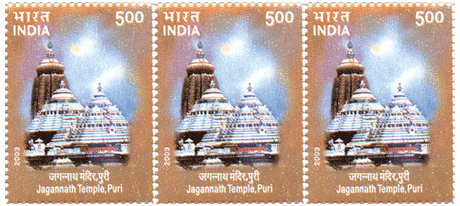
The Odishan temple architecture which made a humble beginning before the Sixth Century A.D. had reached its pinnacle of perfection by the time the temple of Lord Jagannath was built. It took three generations worth of time to build the famous Jagannath Temple of Puri. Initiated by King Anantavarman Chodaganga Deva of the Eastern Ganga Dynasty in the middle of the eleventh century and completed by his grandson King Anangbhima Deva III in 12th century (1112-1148 AD), Jagannath temple is one of the oldest temples in the world. Puri Jagannath temple is a survivor of 18 invasions. The temple is known for its unique architecture, which includes a massive compound wall and a large temple complex with multiple towers, halls, mandapas and shrines.

Among the existing temples in Odisha, the temple of Jagannath is the highest. The height of the main temple is 65 meters (214 feet 8 inches). The temple contains some of the finest specimens of Odishan architecture and sculpture. The temple is surrounded by two rectangular walls, the outer enclosure is called Meghanad Prachir and the inner enclosure is called Kuruma Bedha. The Jagannath temple is on a perfect pancha-ratha plan. The temple is a complete example of the fully developed Kalinga style, having all the four essential parts - the Vimana or the sanctum sanctorum, the Jagamohana or the Audience Hall, the Nata Mandapa or the Dancing Hall and the Bhoga Mandapa or the Hall of offering.

View Jagannath Temple Old Photo Gallery
View Jagannath Temple New Photo Gallery
Why Jagannath Temple Puri is called as White Pagoda?
The temple is called "White Pagoda" because of its white-painted walls. On the outer walls of the temple, thick layers of plaster had been applied to save the beautiful works of art from the damaging effects of saline air, due to which it looked like a great tiered tower which appeared white. The temple of Jagannath built on an altar presents an imposing sight and can be seen from miles away, so the temple served as important landmarks for sailors in the Bay of Bengal. After 1975, the thick layers of plaster from the main temple tower have been removed by Archaeological Survey of India (ASI) hence revealing the exquisite stone sculpture work.


Why Puri Temple is named as Jagannath temple?
The temple makes Puri as one of the Char Dham (Four Holy Abodes) of India, four cardinal centres of pilgrimage. After travelling the three Dhamas i.e, Dwarika in the west, Badrinath in the north and Rameswaram in the south, the pilgrims visit this place known as Jagannath Dham. The famous temple of Lord Jagannath is named as Jagannath temple, because these four letters Ja, Ga, Na, Tha indicate respectively Lord Jagannath, Lord Balabhadra, Goddess Subhadra and Sri Sudarshan, called as Chaturdha Murti. It is mentioned in Sishu Samhita:
" 'Ja' karastu Jagannathah
Balabhadra 'Ga' karakah,
'Na' kara Subhadra rupa cha
'Tha' karopi Sudarshanah "
Why Jagannath Temple Puri is called as Yamanika Tirtha?
Puri Jagannath temple is also called "Yamanika Tirtha" where, according to the Hindu beliefs, the power of 'Yama', the God of death has been nullified in Puri due to the presence of Lord Jagannath.
Aerial View of Jagannath Temple
Inner wall, Outer wall and the four gates of Lord jagannath Temple
| Content Navigation | ||
| Next Page | ||
|
Loading Section...
Loading Section...
