
Loading Section...
The temple of Lord Jagannath remains a point of discussion for many years as its outer wall was plain and was plastered with a thick coat of lime. The white-washed plain surface devoid of any artistic workmanship prompted scholars to believe that the temple is plain because there was degradation of artistic skills. The temple is carved with a thick coat of plaster, around 16th century A.D. It was applied to save it from further deterioration due to saline weather and wear and tear of ages. Even in the temple complex, all the medium and minor temples are also covered with plaster. Others believe that the plaster was added after it was desecrated by the Muslims and lime wash purified it again.
The maintenance of the temple was vested with the temple administration, but constant leakage and other structural problems prompted Odisha State Government to handover the protection and preservation responsibility to Central Government i.e. Archaeological Survey of India (ASI) in 1974. A committee was constituted in the name of "Jagannath Temple Expert Committee" to provide guidance to Archaeological Survey of India. In the first meeting, Dr. M.N. Deshpande, the then Director General of ASI informed that the plaster existing on the outer wall is to be removed as it became porous and spongy and danger for the very stability of the main temple structure. The test check made, revealed that underneath this thick plaster beautiful carvings are existing. Despite great protest of the pandas (priests) and local public, de-plastering scheme was formulated.
The de-plastering work undertaken by ASI since 1975 on the outer wall of Lord Jagannath temple at Puri has unveiled many unknown artistic and iconographic features. After de-plastering it was noticed that, in the pattern of typical Odishan temple, Lord Jagannath Temple is also abundantly decorated with sculptural and architectural designs and patterns. The wealth of sculptures and decorative designs unveiled by de-plastering presented the temple as a veritable museum of art and architecture. The age-old belief that Jagannath temple is devoid of carvings was proved false and de-plastering work proved successfully that the temple is having much more intricate carvings with full of artistic and iconographic representation.


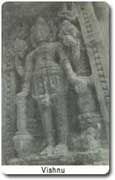
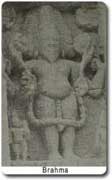
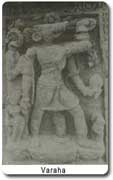
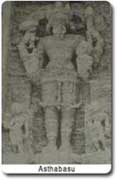
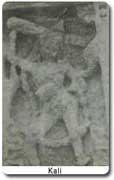
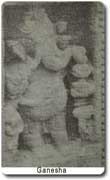
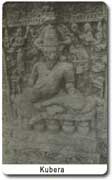
The outer faces of the Vimana are carved with the figures of the deities of the Hindu pantheon. After de-plastering beautiful images of Vishnu, Shiva, Ganesha, Goddess Kali, Brahma, Varaha, Kubera and composite icons of Brahma and Vishnu are visible. On the lower part of the temple, over the horizontal panels, is running parallelly all around the temple known as Basanta, is carved with the mythological stories of Lord Krishna like Kaliya Dalana (killing of snake demon Kaliya), Giri Goverdhana, Bakasura Badha, Rashalila (Krishna in the company of Gopis), Krishna's fight with Kansa, Krishna's move towards Dwarka from Mathura, etc.
| Content Navigation | ||
| Last Page | ||
|
||
| Next Page | ||
|
Loading Section...
Loading Section...

